Senior Pet Comfort at Home | Easy Fixes That Work
Share
Senior pet comfort at home is something most owners improve too late — usually after their dog has already started avoiding certain rooms, or their cat has stopped jumping onto a favourite spot. The changes that make the biggest difference are not expensive or complicated. They are small environmental adjustments that remove the physical friction aging pets deal with every single day. Making senior pet comfort at home a priority before problems become obvious is the most effective approach — and this article covers exactly how to do that.
Why the home environment matters more as pets age
A younger dog or cat adapts to their environment without thinking about it. A senior pet cannot. Slippery floors that a younger dog crossed without hesitation become a source of daily anxiety for an older dog whose rear legs are weaker. A bed that sits low on the ground that was easy to lie down on at three becomes difficult to rise from at ten. The home that worked perfectly for a young pet can quietly become a source of daily physical stress for an aging one.
Senior pet comfort at home starts with understanding that aging pets do not complain — they adapt. They stop using the stairs. They avoid the kitchen floor. They choose the rug over the hardwood. Every one of those behavioral shifts is a signal that the environment is creating friction, and that friction is costing them energy and confidence every single day. Spotting those signals early makes every fix faster and more effective.
Non-slip flooring — the fix most owners overlook
Hard floors are the single most common source of physical stress for senior dogs at home. A dog whose rear legs have weakened makes dozens of tiny muscular corrections on a slippery surface with every step. Over the course of a day that adds up to real fatigue. Over the course of months it contributes to a dog that moves less, explores less, and retreats to one safe spot rather than moving freely through the home.
The fix is straightforward. Non-slip rugs and carpet runners placed along the routes a senior dog uses most — hallways, the path from bed to water bowl, the approach to the back door — remove that friction immediately. Most owners notice a visible difference in how confidently their dog moves within the first day. Senior pet comfort at home improves faster from this single change than almost any other. For senior cats the same principle applies — a few well-placed rugs restore confidence and bring them back into spaces they had quietly abandoned.
The right sleeping surface changes everything
A senior pet spending fourteen to sixteen hours a day lying down is spending the majority of their life on their sleeping surface. Cheap fiber-fill beds that compress under sustained weight are not providing rest — they are providing a thin layer between the pet and the hard floor. An older dog that shifts and repositions constantly through the night is not sleeping deeply. They are searching for a position where the surface still supports them. This is one of the most overlooked aspects of senior pet comfort at home.
High-density foam that contours to the pet's body and stays firm through the night allows an aging dog or cat to reach genuine deep sleep. The observable difference is a pet that rises more easily in the morning and shows more energy during active hours — because the rest they are getting is actually restorative. Senior pet comfort at home improves significantly when the sleeping surface holds its shape night after night without bottoming out.
For dogs that curl when they sleep, a bolstered bed with raised edges gives them something to press against — a signal of enclosure and safety that reduces the low-level alertness that interrupts rest. For dogs that sleep fully stretched, a flat orthopedic surface without edges gives them the room to extend fully without restriction.
Ramps — removing the impact of daily jumps
Every time a senior dog jumps down from a sofa, a bed, or a vehicle, the impact lands on joints that recover more slowly than they once did. Most owners do not notice the cumulative effect until the dog starts hesitating before jumps they previously made without thought. That hesitation is the dog calculating whether the discomfort is worth it. Removing that calculation is one of the most direct improvements to senior pet comfort at home available.
A ramp removes that calculation entirely. Dogs that use a ramp consistently stop hesitating at the edges of furniture and vehicles because the ramp gives them a route that requires no impact at all. Ramps are most effective when introduced before the dog starts refusing — a dog that already associates a surface with discomfort takes longer to trust a new route. For senior cats, low-profile pet stairs beside a sofa or bed give an older cat a gradual route up and down rather than a single drop that jars weakening joints.
Feeding height — a small change with visible results
A senior dog bending their neck to floor level to eat twice a day puts repeated strain on a neck and spine that are already working harder than they once did. Raised feeding bowls bring food and water to a natural height that requires no neck extension — the dog eats with a flat back and relaxed shoulders. Owners who switch to elevated bowls consistently notice their dog finishing meals more willingly and with less post-meal restlessness.
Senior pet comfort at home in the feeding area also includes water access. Senior cats drink less water than younger cats, and a still bowl at floor level that goes stale quickly does not encourage consistent drinking. A water fountain that keeps water moving and fresh removes the biggest barrier most older cats have to adequate daily hydration. Both changes are small in effort and visible in results within the first week.
Temperature and draft control
Senior pets regulate body temperature less efficiently than younger animals. A dog sleeping near an exterior wall or an air conditioning vent loses body heat throughout the night and wakes earlier and more fatigued than they went to sleep. A cat that has found a sunlit spot on a cold tile floor is warm for twenty minutes and cold for the rest of the day. Temperature is a frequently missed element of senior pet comfort at home that costs nothing to address.
Moving the sleeping area away from drafts, exterior walls, and vents makes an immediate difference. Adding a heat-retaining blanket or a self-warming bed insert extends that warmth through the night without requiring any electrical source. For senior pets in colder climates or air-conditioned homes, controlling the temperature of the sleeping area is one of the highest-impact changes available.
Quiet zones — giving aging pets a place to decompress
Older dogs and cats become more sensitive to noise and activity as they age. A senior pet in a high-traffic area of the home is constantly processing stimulus that a younger pet would filter out automatically. That low-level alertness is exhausting over the course of a day and contributes to a pet that seems tired, withdrawn, or anxious without any clear cause. A dedicated quiet zone is a direct senior pet comfort at home improvement that costs nothing beyond placement.
A bed or mat placed away from the main traffic routes of the home, in a spot with consistent low light and minimal noise, gives an aging pet a place to decompress fully. Most senior pets begin gravitating toward it within a day or two and start sleeping more deeply once they have found it. How to make home comfortable for senior dogs and cats often comes down to this single addition more than any other.
The products that support senior pet comfort at home
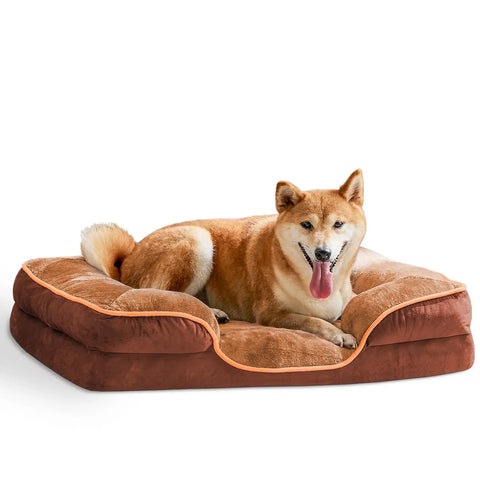
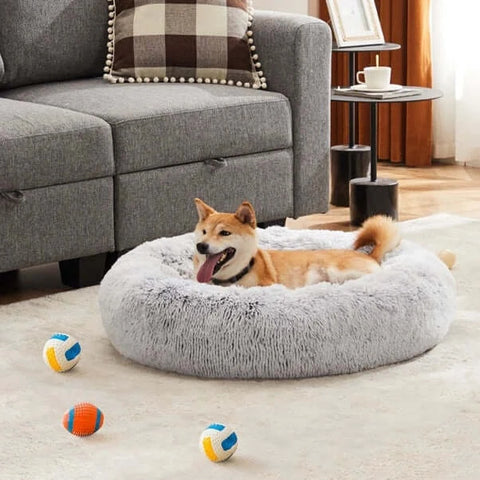
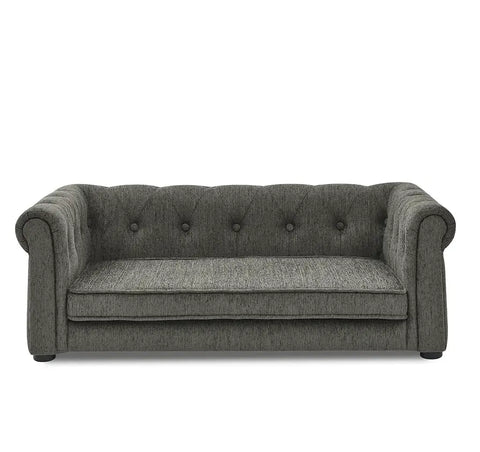
The right products make these environmental changes easier to implement and more effective to maintain. The DreamRest™ Orthopedic Memory Foam Dog Bed uses a solid high-density viscoelastic core that holds its shape under sustained weight — no compression to the floor, no repositioning through the night. The Calm-Cloud™ Plush Donut Dog Bed provides a heat-retaining bolstered enclosure for senior dogs and cats that curl when they sleep. The Grand-Luxe™ Raised Dog Sofa brings the sleeping surface to furniture height — easier to step onto than a floor-level bed is to lower down to for a dog with stiff joints.
For mobility, the Dog Joint & Mobility collection covers ramps for vehicles and furniture, elevated feeding stations, and support accessories chosen specifically for aging dogs. Every product in that collection exists to remove a specific source of physical friction from a senior dog's daily environment — which is the whole point of senior pet comfort at home.