How to Help a Senior Dog Up and Down Stairs
Share
The first time it happens, it stops you cold. Your dog — who used to fly up the stairs to beat you to bed — pauses at the bottom step. Maybe they look up, then back at you. Maybe they try, slip, and decide it isn’t worth it.
Stairs are one of the earliest places aging shows up, because they ask a lot of the back legs and hips all at once. The good news: most of what makes stairs hard for a senior dog can be eased with a few changes to the floor, the right bit of equipment, and a little patience. None of it requires renovating your house.
Here’s how to help your older dog get up and down safely — and how to tell when it’s time to loop in your vet.
First, watch how they move (and when to call the vet)
Before you change anything, spend a few days noticing the pattern. You’re not diagnosing — you’re gathering information that helps you, and your vet, make better choices.
Things worth noting:
- Do they hesitate more going down than up? Down is harder on the front end and often more frightening for dogs who’ve slipped before.
- Are they “bunny-hopping” both back legs together instead of taking steps one at a time?
- Do they manage fine on carpet but struggle on hardwood, tile, or laminate?
- Is it worse first thing in the morning, after a nap, or in cold weather?
- Has it come on gradually, or suddenly?
A slow, gradual change is common as dogs age. But a sudden reluctance, crying out, dragging a paw, or refusing to move at all is a reason to call your veterinarian promptly — those can point to pain or a problem that needs a professional look. When in doubt, a vet visit is always the right first step. Nothing in this guide replaces that.
Not sure where your dog falls on the aging curve? Our senior pet age calculator gives you a quick sense of their stage in human-equivalent years, which can be a helpful thing to mention at your next checkup.
Fix the floor before you fix anything else
The single most overlooked cause of stair struggles isn’t the stairs — it’s traction. Hard, smooth steps give an older dog nothing to grip, and a dog that has slipped once will remember it. Fear of slipping makes them tense up, which makes the next attempt harder.
Cheap, fast wins:
- Add a stair runner or carpet treads. A grippy surface on each step gives the back paws something to push against and turns a scary climb into a manageable one. Non-slip adhesive treads cost very little and go down in an afternoon.
- Trim the fur between their paw pads. Overgrown paw fur slides on smooth floors. A careful trim restores a surprising amount of grip.
- Consider toe grips or paw traction. Small rubber grips that fit over the nails can help some dogs hold the floor better. Check fit and comfort, and ask your vet if you’re unsure.
- Light the stairs. Aging eyes plus a dim staircase is a bad combination. A plug-in nightlight at the top and bottom removes one more reason to hesitate.
For a lot of dogs in the early stages, traction alone buys back months of confident, independent stair use.
Give them a gentler path: ramps and steps
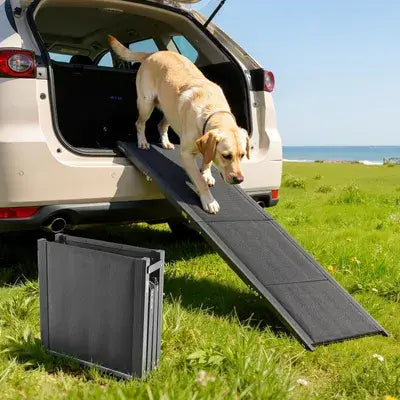
When steps themselves become too much — or you simply want to take the strain off those joints — a ramp turns a steep climb into a gentle slope. This is also the best long-term answer for the two places senior dogs struggle most: getting into the car and getting onto the bed or sofa.
A ramp matters more than people expect, because every jump down from a vehicle or couch lands a senior dog’s full weight on already-tired front legs. Removing those repeated impacts is one of the kindest changes you can make.
What to look for in a ramp:
- A long, gentle slope. Length is what makes a ramp easy. A short, steep ramp is just stairs in disguise. Longer ramps create a shallower incline that aging legs can handle calmly.
- A genuinely non-slip surface. This is non-negotiable for a nervous dog. The walking surface should grip, not glide.
- The right width and weight capacity. Bigger dogs need a wider, sturdier base so they feel stable enough to commit to the climb.
- Folding or telescoping design if you’ll move it between the car and the house.
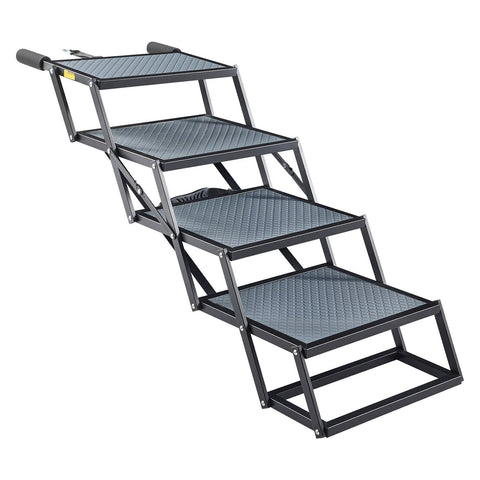
If the daily battle is the car, a heavy-duty dog ramp built for SUVs gives larger dogs a wide, stable surface to walk up instead of being lifted. For taller or lifted vehicles where the angle gets steep, an extra-long dog ramp for trucks keeps the slope gentle enough that your dog can take it at their own pace. Where the climb is onto a bed or sofa rather than into a vehicle, a set of dog stairs built for large and senior dogs takes up less floor space than a ramp — a fair option for a dog that is steady on their feet but has stopped jumping. You’ll find the full range in our joint and mobility collection.
Do dogs prefer ramps or stairs? Most senior dogs do better with a ramp once they’re used to it, because it asks for a steady walk rather than the lifting-and-lowering motion that stairs and pet steps require. Steps can work well for small dogs reaching a low couch, but for larger or stiffer dogs, a ramp is usually the easier ask.
How to get a nervous dog to actually use the ramp
A ramp only helps if your dog will walk on it — and a brand-new object in the house can be suspicious at first. Go slow and keep it positive. Reward-based introduction works far better than coaxing or forcing.
A simple way in:
- Lay the ramp flat on the ground first, with no incline at all. Let your dog sniff it and walk across it for treats until it’s boring and familiar.
- Raise the angle gradually over a few sessions — a low slope, then a little higher, rewarding each calm trip.
- Lead with a treat or a favorite toy at the far end so they walk toward something good.
- Reward at the top and the bottom, so both the climb and the descent feel safe.
- Keep sessions short and upbeat. End before they get tired or frustrated.
Never drag a frightened dog onto a ramp. One bad scare can set you back weeks. Patience here pays off fast.
When they need a lift: slings and support harnesses
Some dogs need a hand on the worst days, or for the descent that scares them most. A support sling or lifting harness lets you take part of their weight so they can still use their own legs, without you straining your back or scruffing them awkwardly.
Two common styles:
- A simple under-belly sling — a padded strap that goes under the midsection, with handles on top. Quick to use for a short flight of stairs.
- A full-body lifting harness — supports the front and back ends, better for dogs who need help at both ends or for longer-term daily use.
The goal is assistance, not carrying. You’re sharing the load so your dog stays mobile and keeps using those muscles. For very large dogs, or if you have stairs you simply can’t make safe, a sling buys real independence for everyone in the house.
Make the rest of the day easier, too
Stairs are one moment in a senior dog’s day. The dogs who handle them best are usually the ones who are comfortable the rest of the time, too.
A few things that support easier movement overall:
- Block off the stairs when you’re not there to supervise. A pet gate at the top and bottom removes the temptation to attempt a risky climb alone. It’s the simplest way to prevent the fall you’re worried about.
- Bring the essentials downstairs. If your dog sleeps upstairs, a comfortable bed, water, and a potty route on the main floor can mean far fewer trips up and down.
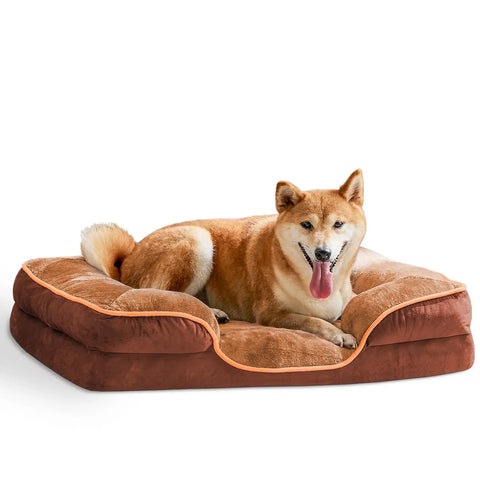
- Give those joints a proper place to rest. A supportive raised dog sofa is easier to step onto than a tall human bed and keeps your dog near you without the climb. Quality rest matters as much as the right ramp.
- Keep stress low. Some senior dogs get anxious as their world feels less predictable; gentle routines and calming comfort products can help them settle.
- Talk to your vet about joint support and pain management. This is their department, not ours. Your vet can advise on whether supplements, diet changes, or other support make sense for your dog specifically. We’d rather you ask them than guess.
Putting it together
Most senior dogs don’t need to lose the stairs — they need the stairs (and the car, and the couch) to ask a little less of them. Start with traction, because it’s cheap and it solves a surprising amount. Add a ramp where the climb is steepest, introduce it slowly and kindly, and keep a sling on hand for the hard days. Block off what’s genuinely unsafe, and let your vet lead on anything to do with pain.
Do that, and the dog who paused at the bottom step has a good chance of moving through their home with confidence again — which is really the whole point.
Frequently asked questions
How can I make stairs easier for my senior dog?
Start with traction: add a stair runner or non-slip treads, trim the fur between their paw pads, and light the staircase. If steps are still too much, a gently sloped ramp or pet steps can replace the climb, and a support sling lets you share their weight on harder days.
Why is my old dog suddenly having trouble with stairs?
Aging joints, reduced muscle strength, weaker vision, and slippery floors all make stairs harder over time. A gradual change is common with age — but a sudden refusal, yelping, or dragging a paw warrants a prompt call to your veterinarian, since it can signal pain or an underlying issue.
Do dogs prefer ramps or stairs?
Most senior and larger dogs do better with a ramp once they’ve adjusted, because a ramp asks for a steady walk rather than the repeated lifting motion of stairs. Small dogs reaching a low surface may do fine with pet steps. Introduce either one slowly with treats.
What device can help a dog get up and down stairs?
Common options include a stair runner for grip, a sloped ramp to replace steps, pet steps for low surfaces like a bed or sofa, and a support sling or lifting harness to help share your dog’s weight. For the car and the bed, a non-slip ramp is usually the most practical long-term aid.
Is it better to carry my senior dog up the stairs?
Carrying can help in the short term, but lifting a large dog repeatedly is hard on your back and can feel insecure to the dog. A support sling lets your dog use their own legs while you steady them, which keeps their muscles working and is usually safer for both of you.