buying guide
Best Cat Steps and Ramps for Senior Cats
Reader-supported: when a guide links to a product, that link may earn us a commission at no cost to you. As an Amazon Associate, Wagisk earns from qualifying purchases. How this works · How we choose products.
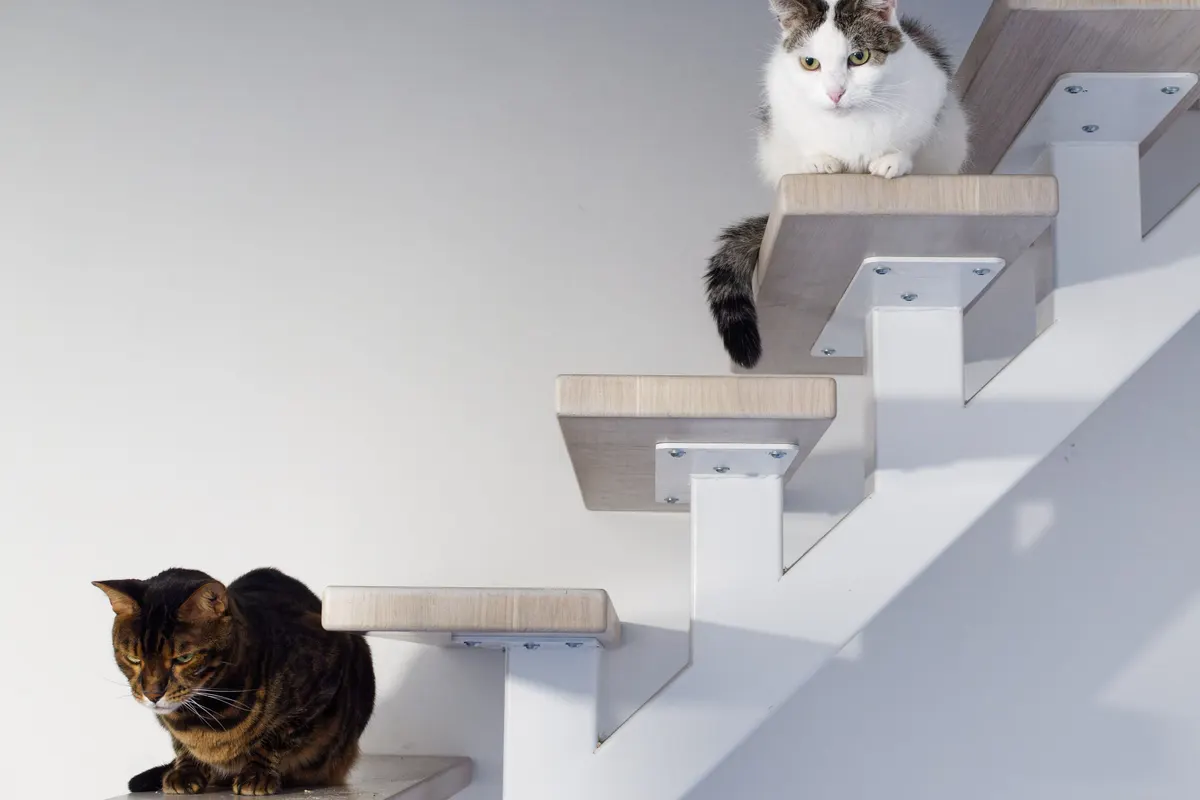
The right cat steps or ramp depends on the height of the spot your cat wants to reach, such as a bed or sofa. International Cat Care says a series of shallow steps or a gently sloping ramp can help an older cat reach a favourite lookout. Measure that height first, then compare it with each product’s published height.
Three picks are compared below. Where a maker does not publish a figure, the table says “Not published” instead of guessing.
The picks at a glance
| Product | Type | Size | Height | Weight limit | Steps | Link |
|---|---|---|---|---|---|---|
| PetSafe CozyUp Bed Ramp | Ramp | 70 × 16 × 25 in | 25 in | Up to 120 lb | None (ramp) | Check price →(paid link) |
| PetSafe CozyUp Pet Steps | Steps | 24 × 16 × 20 in | 20 in | Up to 70 lb | 4; step height not published | Check price →(paid link) |
| Pet Gear Stramp | Stair and ramp | 28 × 16 × 16 in | 16 in | Not published | First step 5 in; count not published | Check price →(paid link) |
Tallest ramp: PetSafe CozyUp Bed Ramp
PetSafe’s product page gives the ramp as 70 in L × 16 in W × 25 in H, calls it 25 inches tall and wood-constructed, and rates it to support pets up to 120 lb. It is topped with heavy-duty carpet, which PetSafe says helps keep traction for your cat or dog, and the maker describes it as easy to assemble.
Steps with siderails: PetSafe CozyUp Pet Steps
PetSafe’s page lists four steps measuring 24 in L × 16 in W × 20 in H, rated to support pets up to 70 lb. It lists nonskid feet and fabric treads, and siderails that PetSafe says give your pet confidence while climbing. The page does not list the materials.
Stair and ramp in one: Pet Gear Stramp
Pet Gear’s page names it the Stramp Stair and Ramp Combination with supertraX for dogs and cats, lightweight and portable, no tools required. It gives the first step as 5 in from the floor, the size as 28 in L × 16 in W × 16 in H, and the product weight as 8.7 lb.
How steep can a cat ramp be?
No published cat-specific ramp angle was found. Every angle band Wagisk has is written for dogs, so treat the figures below as the site’s existing reference, not a cat rule.
Our guide how long should a dog ramp be works out the angle as arcsin(height / ramp length) and uses these bands:
- 25 degrees is the target for a senior or hesitant dog, about 2.4 times the height.
- 30 degrees is the upper limit, the steepest a mobile dog should be asked to climb, at least 2 times the height.
- Roughly 18-25 degrees is the rehab guidance from Susan Davis, PT, published by Dr. Patrick Mahaney: 18-20 degrees for toy and small dogs and 22-25 for medium dogs.
For a cat, aim for the gentler end of those bands, which means a longer ramp for the same height rather than one near 30 degrees.
On PetSafe’s published figures of 25 in tall and 70 in long, the CozyUp Bed Ramp works out at about 20-21 degrees: about 21 degrees if the 70 in is the slope length, about 20 degrees if it is the floor footprint. PetSafe does not say which. Either is below the 25 degree dog target.
Worked example. For a 30-inch-high surface, the site’s rule gives at least 60 in of ramp for the 30 degree upper limit (30 in × 2) and 72 in for the 25 degree target (30 in × 2.4). The tallest height labeled in this guide is 25 in, so a 30 in surface is above every product here.
How do you measure your bed or sofa height and match it to a step or ramp?
- Measure the height your cat has to reach. Run a tape straight up from the floor to the top of the mattress or cushion your cat jumps to. This is practical advice, not a vet rule.
- Compare it with each product’s height. The PetSafe CozyUp Bed Ramp is 25 in tall, the PetSafe CozyUp Pet Steps 20 in overall (the page does not say whether that includes the siderails), and the Pet Gear Stramp 16 in.
- Look at the first step. The Stramp’s first step is 5 in from the floor. PetSafe does not publish the height of each step on the Pet Steps, so do not divide the overall height by the number of steps.
- If you choose a ramp, check its length against the height. Use the worked example above: a 30-inch-high surface needs at least 60 in of ramp by the site’s dog rule, and 72 in for the 25 degree target.
- Check the weight rating. PetSafe lists up to 120 lb for the ramp and up to 70 lb for the steps. Pet Gear does not publish one.
- Check the floor space. The lengths listed are 70 in (CozyUp Bed Ramp), 24 in (CozyUp Pet Steps) and 28 in (Stramp).
- Check what the surface is made of. PetSafe lists heavy-duty carpet on the ramp and nonskid feet with fabric treads on the steps, and Pet Gear a supertraX surface.
What do vets say about steps and ramps for older cats?
International Cat Care’s guide to senior cats says “jumping up can be difficult for some senior cats” and that “providing a series of shallow steps, or a gently sloping ramp, can help your older cat to comfortably reach their favourite lookout.” In the same article it advises that, as a cat may struggle to jump as it gets older, you provide ramps and steps where possible so it can still reach its favourite sleeping spots.
It also says narrow windowsills should have padded objects underneath, as some cats struggle with their balance as they age and can fall easily. It notes that laminate, tiled or wood flooring can be slippery for older cats, and suggests placing mats and runners around the home to make walking easier. If a cat is finding stairs difficult, it says you may find the cat spending more time on one level.
International Cat Care lists stiffness, limping or difficulty jumping among the signs to watch in senior cats. Steps and ramps get your cat to a spot; they do not tell you why jumping has become hard, so if you notice any of those signs, see your vet.
How we picked
We didn’t test these steps and ramps hands-on. We compared each maker’s published height, size, weight rating, steps and grip details from its own page, checked on 26 October 2026. Where a maker does not publish a figure, the table says “Not published” and we do not fill it in. Each Amazon listing was checked by hand on 26 October 2026; a fourth candidate was left out because its listing was unavailable. Full method: how we choose products.
Some links on this page are affiliate links: as an Amazon Associate, Wagisk earns from qualifying purchases, at no extra cost to you.
This guide covers helping your cat reach its favourite spots, not veterinary advice. If your cat seems stiff, sore or stops jumping, see your vet.
Related: complete senior pet care guide · best dog stairs for large and senior dogs · non-slip stair treads and rugs
Frequently asked questions
How steep should a cat ramp be?
No published cat-specific ramp angle was found, so we have no cat figure to give. Wagisk's existing dog guidance uses 25 degrees as the target and 30 degrees as the upper limit, so for a cat aim for the gentler end.
How do I know what height of steps or ramp my cat needs?
Measure from the floor to the top of the bed or sofa your cat uses, then compare it with each product's published height: 25 in for the PetSafe CozyUp Bed Ramp, 20 in for the PetSafe CozyUp Pet Steps and 16 in for the Pet Gear Stramp. These are overall heights from each maker's page, so measure before you order.
How long a ramp does a 30 inch high bed need?
Using Wagisk's dog ramp rule, a 30-inch-high surface needs at least 60 inches of ramp for the 30 degree upper limit and 72 inches for the 25 degree target. No cat-specific figure was found, so treat these as the site's reference and not a cat rule.
What does International Cat Care say about helping an older cat reach high spots?
It says jumping up can be difficult for some senior cats, and that a series of shallow steps or a gently sloping ramp can help an older cat reach a favourite lookout. It also advises providing ramps and steps where possible so the cat can still reach its favourite sleeping spots.
Did Wagisk test these steps and ramps?
No. We compared the specifications each maker publishes on its own page, checked on 26 October 2026, and our methodology page explains how we choose products.