
Best Dog Ramps for Large Dogs in 2026: Heavy-Duty Picks for SUVs, Trucks & Senior Big Breeds
Share
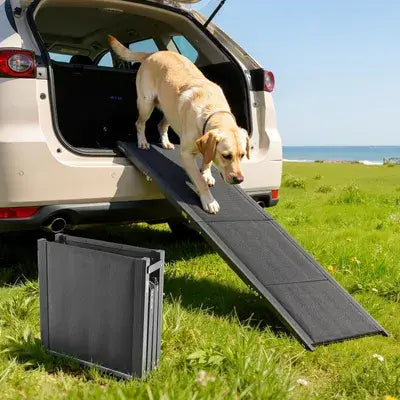
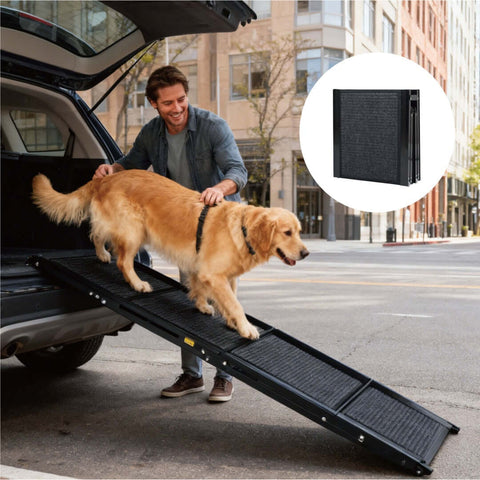
For most large and senior dogs, the best ramp is one rated well above your dog's weight, long enough to keep the incline gentle, and surfaced with real grip so a hesitant dog trusts it on the first step. The strongest all-round choice for big breeds getting in and out of an SUV is an aluminum quad-fold ramp with a felt surface — like the Wagisk Heavy Duty Dog Ramp for SUVs & Large Dogs, rated to 250 lb on a rigid 6063 aluminum frame. Below we break down the main types of ramp by what they're actually best at, so you can match one to your dog and your vehicle.
Wagisk makes the ramp we recommend first. We've explained the trade-offs of every ramp type — including where other designs do a job ours doesn't — so you can judge for yourself.
How we evaluated dog ramps
We focus on senior-pet wellness, so we judged each ramp type on the five things that actually decide whether a large or aging dog will use it:
- Weight capacity and frame rigidity — the rating matters, but a frame that flexes underfoot loses a dog's trust instantly.
- Surface traction — felt or ribbed rubber versus smooth plastic.
- Incline angle — a function of ramp length against your vehicle's height. Longer is gentler.
- Storage footprint — how compact it folds for the cargo area.
- Solo handling — whether one person can position it while a dog waits.
Dog ramp types compared at a glance
| Ramp type | Best for | Typical length | Typical capacity | Surface | Main trade-off |
|---|---|---|---|---|---|
| Aluminum quad-fold with felt (our pick) | Large & senior dogs into SUVs | ~71 in | 250 lb+ | Non-slip felt | Long footprint when extended |
| Telescoping aluminum | Owners with very different vehicle heights | Adjusts ~47–87 in | Up to ~300 lb | Rubber, side rails | Bulkier and heavier folded |
| Molded resin / composite | Wet weather & long-term durability | ~66–72 in | Up to ~300 lb | Ribbed resin | Often shorter, so steeper for tall vehicles |
| Budget mesh / lightweight folding | Occasional use, lighter dogs, tight budgets | ~63–71 in | ~250 lb (claimed) | Fabric or mesh | Frames can flex; less reassuring for big dogs |
| Wooden ramp | Indoor use — beds and couches | ~55 in (adjustable) | ~250 lb | Carpet or rubber | Heavy and not travel-friendly |
Figures are typical ranges across each category, not a single product. Always check the spec of the exact ramp you're considering.
1. Aluminum quad-fold with felt — best for large & senior dogs
Best for: big breeds and stiff-jointed seniors loading into a standard SUV or crossover.
A 70-pound dog launching into a cargo area lands with three to four times its body weight on its front legs. A ramp removes that jump — but only if the dog actually trusts it. This is where the aluminum quad-fold design earns its place. A 71-inch length creates a gradual incline a senior dog can walk at a normal pace instead of scrambling, and a non-slip felt surface gives wide paws real grip rather than the slick plastic that sends dogs sideways. A rigid 6063 aluminum frame rated to 250 lb stays solid underfoot, which is what convinces a hesitant dog to use it a second time.
Our pick in this category is the Wagisk Heavy Duty Dog Ramp. Its adjustable 18–58 inch height range covers SUVs, minivans, and most trucks, and the quad-fold collapses into the cargo area without tools. The honest trade-off: fully extended it takes up most of a standard SUV cargo floor, so you'll fold it before loading other gear — and it costs more than a budget mesh ramp, a premium that buys the rigid frame and felt grip.
→ Driving a lifted truck? See the extra-long Wagisk TrailRamp built for high clearance.
What we’d use for this
2. Telescoping aluminum ramps — best for multiple vehicles
If you move a dog between very different vehicle heights — say a lifted truck and a low car — a telescoping ramp is genuinely useful, because one ramp extends to cover both (often from around 47 to 87 inches). Capacities run high and side rails add first-timer confidence. Where this type wins over a fixed quad-fold: adjustability. The trade-offs are a bulkier folded size and more weight to lift.
3. Molded resin & composite ramps — best for wet weather and durability
Ribbed resin surfaces give excellent wet-paw traction, resist dents and scratches better than metal, and these ramps often carry long warranties. The trade-off is length: many resin ramps are shorter (around 66–67 inches) and narrower, which makes them steeper for tall trucks and a tighter fit for giant breeds. A good pick for medium-height vehicles and rainy climates.
4. Budget mesh & lightweight folding ramps — best for tight budgets
The cheapest ramps are light and pack down small, which suits occasional use or a younger, lighter dog. The cautions: budget ramps often publish thin specs and use frames that flex more under a heavy dog, and a ramp that wobbles is the one a hesitant or senior dog abandons. If you're buying for a big or aging dog, prioritize frame rigidity over the lowest price.
5. Wooden ramps — best for indoor use
Wood ramps look at home indoors and work well for beds and couches, usually with adjustable height settings and a carpeted surface. They're heavy and not built for travel, so think of these as a furniture-access solution rather than a vehicle ramp.
How to choose the right ramp for your dog
- Match capacity to 1.5x your dog's weight, and weight the frame over the printed number — rigidity is what stops the wobble that scares dogs off.
- Pick felt or ribbed rubber over smooth plastic if your dog is senior or hesitant.
- Longer means gentler. Measure your vehicle's load height; the taller the vehicle, the longer the ramp you need to keep the climb walkable.
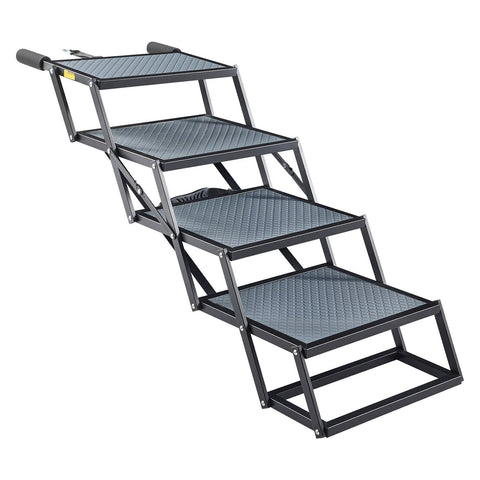
- Decide how it stores. Quad-fold packs flat; telescoping adjusts to more vehicles but takes more room.
- For senior or stiff dogs, prioritize a gentle incline and grip, and introduce the ramp slowly with treats. If your dog is showing pain, stiffness, or new reluctance to climb, talk to your vet before assuming it's just age.
Three companion guides make this choice concrete: getting a senior dog into the car, how long a dog ramp should be (the length-by-vehicle math and a 60-second measuring method), and dog ramps for pickup, semi-cab and side-door access if your vehicle loads from anywhere other than a tailgate. Our own lineup is in the dog ramps collection.
Frequently asked questions
What weight capacity do I need for a large dog?
Choose a ramp rated to at least 1.5 times your dog's weight, then check that the frame doesn't flex — a 250 lb rating on a rigid aluminum frame is more reassuring than a higher number on a frame that bows underfoot.
Are ramps better than stairs for senior dogs?
For most senior dogs a ramp is gentler, because it lets them walk a continuous gradual incline instead of placing and bearing weight step by step. Comfort varies by dog — if yours has a specific mobility condition, your vet can advise what's easiest on their joints.
What surface is safest?
Non-slip felt or ribbed rubber. Smooth plastic is the most common reason dogs refuse a ramp, especially seniors and dogs with wide or soft paws.
How long should the ramp be for an SUV versus a lifted truck?
A 71-inch ramp keeps the incline walkable for standard SUV cargo heights (about 28–36 inches). For lifted trucks and high-clearance vehicles, choose an extra-long or telescoping ramp so the angle stays gentle.
Will my dog actually use it?
Most do, once the surface feels solid and grippy on the first approach. Introduce it on flat ground first, reward each step, and keep early sessions short. A ramp that flexes or feels slick is the one that ends up unused in the garage.
This guide covers general comfort and mobility support and isn't veterinary advice. If your dog shows signs of pain or declining mobility, talk to your vet.
Related: Wagisk Heavy Duty Dog Ramp for SUVs & Large Dogs · Wagisk TrailRamp Extra Long Dog Ramp for Lifted Trucks