How to Get a Senior Dog Into the Car (Without Hurting You or Them)
Share
The vet trip. The weekend at the lake. The simple ride that used to be your dog's favorite part of the day. Then one morning they put their front paws on the seat, gather themselves to spring — and stop. They look back at you. The jump they've made ten thousand times isn't there anymore.
It isn't stubbornness, and it usually isn't sudden weakness. For most senior dogs, the car is the single hardest jump they're asked to make: higher than the couch, with a hard landing and no soft place to miss. The good news is that getting an older dog in and out of the car safely is a solved problem — once you stop relying on the jump.
Here's how to do it without straining your back or theirs, and how to tell when it's time to talk to your vet.
Why the car is the hardest jump
A dog leaping into an SUV cargo area lands with roughly three to four times its body weight on its front legs. A 70-pound dog absorbs 200+ pounds of impact through the wrists and shoulders, over and over, every trip. At three years old that's nothing. At eleven, with stiffer joints and less muscle to cushion the landing, it's the moment that quietly teaches a dog to dread the car.
The refusal you're seeing is often self-protection. Your dog has connected “jumping into the car” with “this hurts,” and they've decided it isn't worth it. That's worth respecting — and working around, not pushing through.
If the change was sudden, or comes with crying out, a dragging limb, or refusing to bear weight at all, skip the rest of this and call your veterinarian first. A gradual fade is normal aging; an abrupt one deserves a professional look. Not sure where your dog is on that curve? Our senior pet age calculator gives a quick read you can mention at your next visit.
The best long-term answer: a ramp
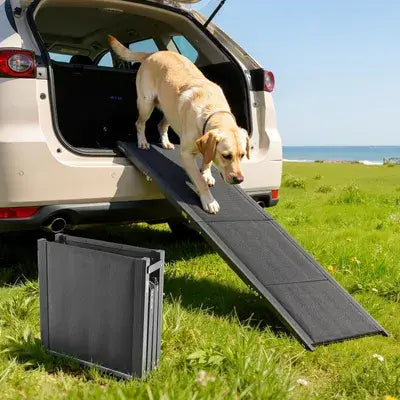
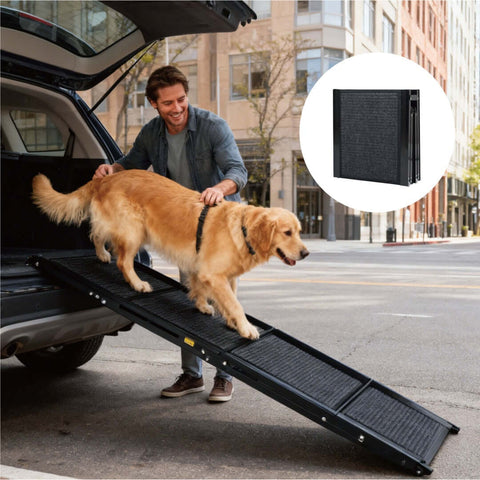
For most senior and large dogs, a ramp is the cleanest fix because it removes the jump entirely and lets your dog walk in under their own power. That last part matters more than people expect — a dog that walks into the car keeps using those muscles and keeps their dignity, instead of being hoisted.
The thing that makes a ramp work is length, because length is what makes the slope gentle. A short ramp against a tall vehicle is just a steeper set of stairs. Match the ramp to your vehicle's height:
- Standard SUV or crossover: a wide, stable ramp sized for that bumper height is ideal. Our Heavy Duty Dog Ramp for SUVs gives larger dogs a non-slip surface broad enough that they'll actually commit to the climb.
- Lifted truck or high tailgate: the angle gets steep fast, so you need extra length. The TrailRamp Extra-Long Dog Ramp keeps even a ~34-inch tailgate at a walkable incline. Browse both in the dog ramps for SUVs, trucks & large dogs collection.
What to look for in any car ramp: a long, low slope; a genuinely non-slip surface (not smooth molded plastic, which turns slick when wet); a sturdy, no-flex frame so a big dog feels secure; and a fold-flat design that fits your storage.
Getting a nervous dog to use the ramp
A ramp only helps if your dog trusts it. Introduce it slowly and make it boring before you make it useful:
- Lay it flat on the ground first and let them walk across it for treats — no incline, no pressure.
- Raise the angle a little at a time over a few sessions, rewarding each calm trip.
- Lead with a treat or favorite toy at the top so they walk toward something good.
- Reward at the top and the bottom, so both directions feel safe.
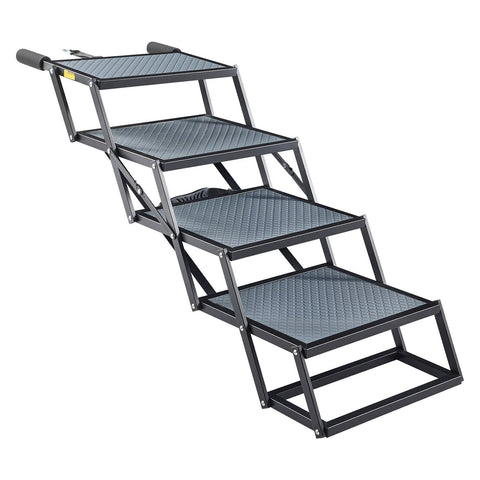
Never drag a frightened dog up a ramp — one bad scare costs you weeks. We walk through the full process in our guide on helping a senior dog up and down stairs, and the same patience applies here.
Ramp length is what decides whether your dog actually uses it — the quick math is in how long should a dog ramp be.
When you need to lift: do it without hurting either of you
Some days, or some vehicles, call for a lift. Done wrong, lifting strains your back and feels alarming to the dog. Done right, it's quick and secure.
- Use a support sling or lifting harness, not your dog's scruff or legs. A padded sling under the midsection (or a full-body harness for dogs who need front-and-back support) spreads the load and gives you handles to lift with rather than grabbing at limbs.
- Lift with your legs, not your back. Squat, bring the dog close to your chest, and stand with your core — the same form you'd use for a heavy box.
- For big dogs, make it a two-person job when you can: one supporting the chest, one the hindquarters.
- Support the back end especially. Senior dogs lose strength in the rear legs first; a hand or sling under the hips prevents the back end from collapsing mid-lift.
The goal is assistance, not carrying dead weight. Even a dog who needs a boost should be doing some of the work with their own legs whenever they safely can.
Small changes that make every trip easier
- Add traction to the landing. A non-slip mat in the cargo area or on the seat gives paws something to grip so the entry doesn't end in a slide.
- Lower the target where you can. Loading from a curb, a driveway slope, or the lower side door instead of a tall tailgate can shave off the inches that make the difference.
- Cushion the ride. A supportive surface to settle on means less strain holding position on corners. Quality rest helps mobility overall — the same thinking behind a good senior dog joint & mobility collection at home.
- Keep it calm and unhurried. Rushing a hesitant senior dog raises the stakes for them. Give the climb a beat, reward it, and keep the whole thing low-drama.
- Ask your vet about comfort and joint support. Whether supplements or other care make sense is their call, not ours — but it's a good conversation to have if the car is getting harder.
The bottom line
Your senior dog hasn't decided they hate the car — they've decided the jump isn't safe, and they're right. Take the jump out of the equation with a ramp matched to your vehicle's height, keep a sling on hand for the days they need a lift, add traction so nothing slides, and let your vet lead on anything to do with pain. Do that, and the dog who hesitated at the door has a good chance of riding shotgun again.
Frequently asked questions
How do I get my senior dog into the car if they can't jump anymore?
The most reliable fix is a ramp sized to your vehicle's height, so your dog walks in instead of jumping. Introduce it slowly with treats. On days they still need help, use a support sling and lift with your legs — never by the scruff or limbs. If the change was sudden or painful, see your vet first.
What kind of ramp is best for getting a large dog into the car?
Look for length (a long, gentle slope), a non-slip surface, a sturdy no-flex frame, and a fold-flat design. For standard SUVs, a wide heavy-duty ramp works well; for lifted trucks or high tailgates, choose an extra-long ramp so the incline stays walkable.
Is it bad for senior dogs to jump in and out of the car?
Repeated jumping lands several times a dog's body weight on the front legs and can be hard on aging joints. Many owners switch to a ramp or assisted lifting to remove that impact. Ask your vet about your individual dog's activity limits.
How do I lift a large dog into an SUV without hurting my back?
Use a support sling or lifting harness for handles and even weight distribution, squat and lift with your legs while holding the dog close to your chest, and make it a two-person job for big dogs when possible — one supporting the chest, one the hindquarters.
Why won't my old dog get in the car anymore?
Most often it's stiff or sore joints making the jump feel unsafe, so the dog refuses to protect themselves. A gradual change is common with age. A sudden refusal, yelping, or a dragging leg warrants a prompt vet visit.